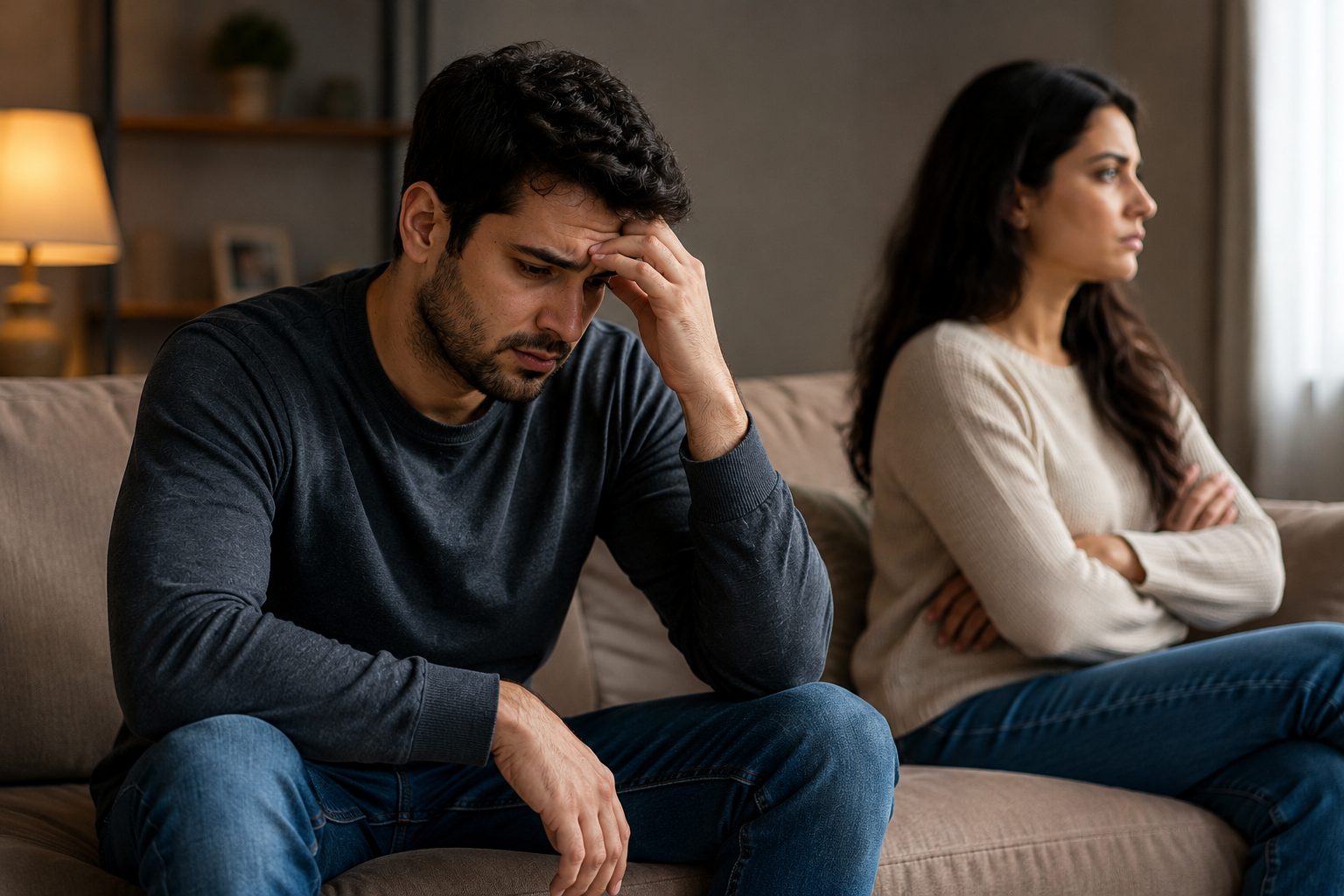
I never imagined that one day I would ask my wife to choose between our marriage and her family. Even saying those words now makes me uncomfortable, because I know how cruel they sound when taken out of context. But sometimes, an ultimatum isn’t born from anger. Sometimes, it comes after years of feeling like you are no longer a priority in your own marriage.
When she finally gave me her answer, I was sitting across from the woman I had once promised to love for the rest of my life. She looked at me with tears in her eyes and told me she couldn’t choose me over her family. I nodded, even though something inside me broke. I had spent years trying to make room for her family in our marriage, but suddenly I realized there was no room left for me.
So when she chose them, I chose myself. Not because I stopped loving her. Not because I wanted to punish her. And certainly not because I wanted to destroy our marriage. I chose myself because I had finally reached the point where staying meant losing the person I had become before I married her.
Our Life Before Marriage
When I met my wife, I never thought our marriage would end with an ultimatum.
She was the kind of person who made ordinary days feel special.
She laughed easily.
She remembered tiny details about people.
She cared deeply about the people she loved.
And she loved her family more than anyone I had ever met.
At the beginning, I admired that.
I thought it was beautiful.
I told myself that someday, her family would feel like my family too.
I never wanted to separate her from them.
In fact, I encouraged her to stay close to them.
“Call your mom.”
“Go see your dad.”
“Take your brother out.”
I never complained.
I believed that loving my wife also meant respecting the people she loved.
And for a while, everything worked.
Until it didn’t.
Adjusting to Married Life
There wasn’t one huge event that destroyed our marriage.
There were hundreds of small moments.
A dinner we had planned would get canceled because her family needed her.
A weekend we had planned together would suddenly become a family obligation.
A financial problem at her parents’ house would somehow become our financial problem.
And every time I tried to talk about it, I heard the same sentence.
“They’re my family.”
I knew.
Of course I knew.
But I was her husband.
And slowly, I began wondering when that fact would start mattering too.
Her Family Became a Bigger Part of Our Lives
Whenever something hurt me, I convinced myself it wasn’t worth fighting about.
I told myself marriage required compromise.
So I compromised.
Then I compromised again.
And again.
Eventually, compromise stopped feeling like something we were doing together.
It started feeling like something I was doing alone.
I didn’t notice when resentment began replacing patience.
I didn’t notice when conversations became arguments.
And I definitely didn’t notice when I stopped telling her what was bothering me.
I simply became quiet.
That was probably my biggest mistake.
I thought silence would keep our marriage peaceful.
Instead, it only allowed the distance between us to grow.
The Problems We Started Having
There was one night I will never forget.
It was our anniversary.
I had planned everything.
Nothing expensive.
Just dinner at our favorite restaurant, a small gift, and a quiet evening together.
I was genuinely excited.
A few hours before we were supposed to leave, her brother called.
There was a problem at her family’s house.
She looked at me and said, “I have to go.”
I remember asking, “Tonight?”
She nodded.
I didn’t argue.
I didn’t yell.
I simply said, “Okay.”
Then she left.
I sat alone at the restaurant.
The waiter eventually asked if someone else was joining me.
I smiled and said, “No. Just me.”
That sentence broke something inside me.
Not because I was alone at a restaurant.
Because I realized I was beginning to feel alone in my marriage.
Trying to Make Things Work
After that night, things changed.
Not immediately.
But slowly.
I stopped expecting her to choose our plans over her family’s problems.
I stopped asking her to make me a priority.
I stopped hoping she would notice how much I was hurting.
I became independent emotionally because depending on her had started hurting too much.
And strangely enough, she noticed the distance.
One night, she asked me,
“Why don’t you talk to me anymore?”
I almost laughed.
Because I had spent years trying to talk.
She just hadn’t heard me.
But instead of saying that, I told her,
“I’m tired.”
She asked, “Of what?”
I said,
“Of feeling like I have to compete for a place in my own marriage.”
She became defensive.
She told me I was being unfair.
She said I didn’t understand what family meant to her.
And maybe I didn’t.
But I understood what marriage meant to me.
It meant two people building a life together.
The Conversation We Needed to Have
The conversation that eventually destroyed our marriage didn’t happen during a screaming match.
It happened on an ordinary evening.
We were sitting in our living room.
No music.
No television.
Just silence.
I had thought about what I wanted to say for weeks.
Finally, I looked at her and said,
“I can’t live like this anymore.”
She looked confused.
I continued.
“I’m not asking you to stop loving your family.”
“I’m asking you to protect our marriage.”
She told me she was already doing that.
I shook my head.
“No. You’re protecting everyone except us.”
She became emotional.
She told me that her parents had sacrificed everything for her.
That they had been there when she needed them.
That she couldn’t abandon them now.
I told her I wasn’t asking her to abandon anyone.
I just wanted boundaries.
I wanted our decisions to belong to us.
I wanted our marriage to matter.
But somehow, every sentence I spoke sounded like an attack to her.
And every answer she gave sounded like another reminder that I was second.
The Decision We Had to Make
I don’t remember exactly how the argument escalated.
But I remember the moment.
I looked at her and said,
“Then choose.”
She stared at me.
I could see the shock in her eyes.
I continued,
“Choose your family or choose this marriage.”
The moment those words came out, I wanted to take them back.
But it was too late.
She was crying.
I was crying.
And suddenly, the years of frustration had turned into one question that neither of us could escape.
She asked,
“Are you really making me choose?”
I whispered,
“I’m asking you to tell me where I stand.”
She looked down.
For several seconds, there was complete silence.
Then she said,
“I choose my family.”
Four words.
That’s all it took.
Four words to end years of memories.
Moving Forward Separately
People might expect me to beg.
Maybe they expect me to threaten her.
Maybe they imagine me getting angry.
I didn’t.
I simply nodded.
There was a strange calmness inside me.
Not happiness.
Not relief.
Just acceptance.
I said,
“Okay.”
She looked surprised.
Maybe she expected me to argue.
Maybe she expected me to change my mind.
Maybe she thought I would finally understand that she couldn’t choose.
But I had understood.
She had made her decision.
And I had to make mine.
“I love you,” I told her.
“But I can’t keep living in a marriage where I feel alone.”
She cried harder.
I cried too.
Because loving someone doesn’t mean you stop hurting when they choose something else.
Giving Each Other Space
For the first few days, she seemed confident about her decision.
Her family supported her.
They told her she had done the right thing.
They told her that no husband should ever force a wife to choose between her husband and her parents.
And maybe they were right.
Maybe I had handled everything terribly.
Maybe I should have walked away without giving an ultimatum.
I have replayed that night hundreds of times.
I have wondered whether I could have saved our marriage by choosing different words.
But one thing never changed.
The problems existed long before that conversation.
The ultimatum didn’t create them.
It exposed them.
Talking Again
What surprised me was that she seemed prepared to choose her family.
But she wasn’t prepared for what that choice actually meant.
She thought choosing them meant nothing would really change.
She thought I would eventually calm down.
She thought I would call her.
She thought I would come back.
But I didn’t.
For the first time in our marriage, I stopped chasing her.
I didn’t send long messages.
I didn’t ask her relatives to intervene.
I didn’t beg her to reconsider.
I respected her decision.
And apparently, that was harder for her than the ultimatum itself.
At first, she called to talk about practical things.
Then she started calling because she missed me.
One night, she said,
“I didn’t think you’d actually leave.”
That sentence stayed with me.
Because that’s when I realized something.
She hadn’t believed my pain was real until there were consequences.
I told her,
“I never wanted to leave you.”
She said,
“Then why did you?”
I answered,
“Because you told me where I stood.”
She started crying.
“I didn’t mean it like that.”
I said,
“But you said it.”
There was silence.
Then she whispered,
“I thought you would fight for me.”
I closed my eyes.
“I did.”
She didn’t understand.
So I explained.
“I fought for us for years.”
Understanding What Happened
Choosing myself didn’t mean I stopped loving her.
It didn’t mean I suddenly hated her family.
It didn’t mean I believed I was perfect.
I knew I had made mistakes.
I knew the ultimatum had been unfair.
I knew marriage shouldn’t be about forcing someone to choose.
But I also learned something painful.
You cannot build a healthy marriage by constantly sacrificing your own peace.
There comes a point when compromise becomes self-abandonment.
And I had crossed that line years earlier.
I had just been too afraid to admit it.
A Chance to Reconcile
Months later, she asked me to meet her.
We sat in the same café where we had once celebrated good news together.
She looked different.
Not physically.
Emotionally.
She seemed tired.
She told me that after I left, things with her family weren’t what she expected.
The people she had chosen were still there.
But the life she had built with me was gone.
She told me she finally understood what I had been asking for.
“Boundaries,” she said.
“Partnership.”
“Us.”
I listened.
Then she asked,
“Can we start again?”
That was the hardest question she had ever asked me.
Because a part of me wanted to say yes immediately.
I still loved her.
I probably always would.
But love isn’t the only thing required to rebuild a broken marriage.
Trust matters.
Respect matters.
Change matters.
And most importantly, both people have to want the same future.
What I Told Her
I looked at her and said,
“I forgive you.”
She started crying.
Then I continued,
“But I don’t know if I can go back.”
She asked why.
I told her the truth.
“Because I spent so long begging you to see my pain that I don’t know if I can become that person again.”
She reached across the table.
I let her hold my hand.
For a few seconds, neither of us spoke.
Then I said,
“I don’t regret loving you.”
“I don’t regret marrying you.”
“I don’t regret everything we shared.”
“But I can’t regret choosing myself either.”
She nodded through her tears.
And for the first time, she didn’t argue.
What I Learned
People like simple endings.
They want the husband and wife to reconcile.
They want an apology.
They want a hug.
They want the couple to promise they’ll never hurt each other again.
Real life doesn’t always work that way.
Sometimes two people love each other deeply and still aren’t able to build a healthy life together.
Sometimes the person you love teaches you the most important lesson of your life by breaking your heart.
My wife taught me that love without boundaries can become resentment.
I taught myself that staying isn’t always the same thing as fighting.
Sometimes leaving is the first honest thing you do for yourself.
Looking Back
For a long time, I blamed her.
Then I blamed her family.
Then I blamed myself.
Eventually, I realized blame wasn’t going to give me my life back.
She chose what she believed she had to choose.
And I chose what I believed I had to choose.
Neither of us walked away completely innocent.
Neither of us walked away completely guilty.
We were simply two people who reached a point where love couldn’t solve the problems we had ignored for too long.
I learned that you shouldn’t wait until you are emotionally destroyed before speaking up.
I learned that boundaries should be established before resentment takes root.
I learned that your partner’s family can be important without becoming the third person in your marriage.
And I learned that asking someone to choose between you and their family may never be the right answer.
If I could go back, I would handle things differently.
I would speak sooner.
I would set boundaries earlier.
I would seek help before resentment became anger.
And if nothing changed, I would leave quietly instead of forcing a choice.
Because nobody should have to prove their love by choosing one person over another.
Moving On
There are nights when I still miss her.
Sometimes I hear a song and remember our first apartment.
Sometimes I pass a restaurant and remember our anniversary.
Sometimes I see an old photograph and wonder how two people who loved each other so much ended up becoming strangers.
Those memories still hurt.
But they don’t destroy me anymore.
Because I finally understand something I didn’t understand back then.
Choosing yourself doesn’t always feel like winning.
Sometimes it feels like losing the person you thought you’d grow old with.
Sometimes it feels like sitting alone in a quiet apartment and wondering whether you made the biggest mistake of your life.
But eventually, if you are lucky, you realize that choosing yourself wasn’t about proving the other person wrong.
It was about refusing to disappear inside someone else’s priorities.
What I Want Her to Know
If my wife ever reads this, I don’t want her to think I wrote it to punish her.
I don’t hate her.
I don’t hate her family.
And I don’t wish that our marriage had never happened.
I loved her.
I still care about her.
A part of me probably always will.
But love doesn’t give us permission to lose ourselves completely.
I hope she finds happiness.
I hope her family continues to love and support her.
And I hope one day she understands that when I asked her to choose, I wasn’t really asking her to choose between me and them.
I was asking her to tell me whether there was still a place for our marriage in the life she was building.
She answered.
And for the first time, I listened.
Choosing Myself
Today, I don’t see myself as the man who left his wife because she chose her family.
I see myself as the man who finally realized that he couldn’t keep begging to be valued.
Maybe I should have walked away sooner.
Maybe I should have never issued that ultimatum.
Maybe there was another way.
I’ll carry those questions with me for a long time.
But I also know this:
I didn’t leave because I stopped loving her.
I left because I finally understood that loving someone should never require you to stop loving yourself.
She chose her family.
I respected her choice.
And then I made mine.
I chose peace.
I chose dignity.
I chose the person I had slowly lost during all those years of trying to keep everyone else happy.
I chose myself.
And sometimes, the hardest choice you make is also the one that finally saves you.